|
|
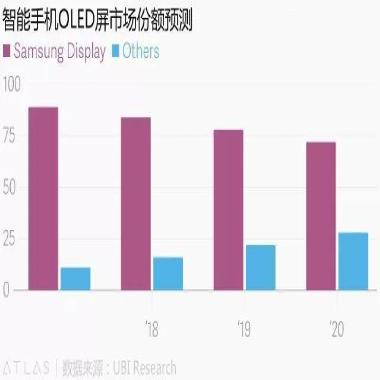
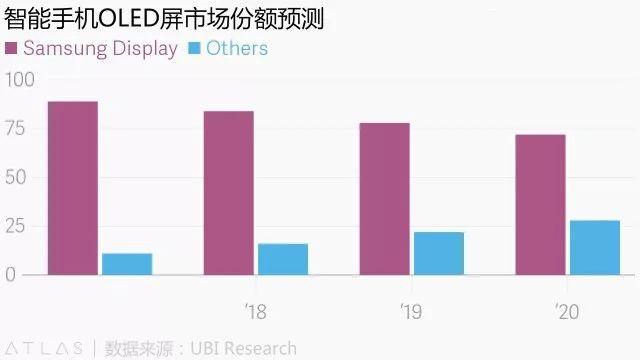
Apple and Samsung are the two major global smartphone giants, taking over 95% of the profits in the smartphone market. The relationship between Apple and Samsung can be said to be both mortal enemies and good friends. Apple needs Samsung to provide components such as screens and chips, and Samsung also earns a lot of profits from it; In the terminal market, both sides are fierce competitors, whether it's the annual marketing battle for new models or the seven-year century patent war, the two sides are constantly in conflict. On May 25, 2018, the Apple Samsung patent case was retried in the Federal District Court for the Northern District of California and a unanimous ruling was reached: Samsung Electronics must pay $539 million in compensation to Apple for infringing on iPhone design related patents. Among them, $533.3 million is compensated for three design patents of Apple Inc., and an additional $53 million is compensated for two utility model patents. This is Apple's * victory in the patent battle, but Samsung has not stopped there. A Samsung spokesperson stated that Samsung will retain "all options" to challenge the ruling. It can be seen that this' love and kill 'war will continue. I hate you, but I need you. So, how did the love hate relationship between Apple and Samsung come about? Full screen era: Samsung becomes the winner Firstly, Apple needs Samsung. Or, in other words, Apple needs OLED screens. The iPhone X is Apple's first phone to feature an OLED screen. Thanks to the OLED screen, the iPhone X has finally embraced an ultra narrow bezel screen design. OLED is the most ideal implementation platform for full screen technology: OLED is self luminous, so there is no need to worry about area light leakage. The lower terminal area of flexible OLED screens is relatively short, making it easy to achieve narrow bezel design; The difficulty of cutting irregular shapes on flexible substrates is low, the speed is fast, and the yield is high. Compared to LCD, it has inherent advantages. In the era of full screen display, OLED is the beneficiary. Of course, as a leading OLED manufacturer, Samsung can also be considered a beneficiary of the full screen era. But OLED screens are expensive, which puts Apple in an awkward situation. The OLED screens it needs can only be supplied on a large scale by Samsung Electronics' display division. Even if Apple has money, it cannot find other suppliers that can meet its requirements. Regarding Samsung, most ordinary consumers may think that Samsung sells mobile phones, or even appliances such as televisions and refrigerators. But besides smartphones and home appliances, Samsung's strongest business is actually producing memory, display screens, and other services for other manufacturers. Samsung has the ability to meet a large global demand in the areas of memory and display screens. In addition to producing components for its own devices, Samsung also hopes that manufacturers around the world will use components produced by Samsung. Samsung is expected to invest approximately $19 billion over the next four years to build related production factories in order to seize market share. In July 2017, Intel's leading position in the semiconductor industry since 1993 changed hands, and Samsung surpassed Intel to become the world's largest chip manufacturer. In the field of OLED displays, Samsung's market share exceeds 90%, almost approaching a monopoly. This means that as smartphones such as iPhone that use OLED screens grow, Samsung also grows accordingly.
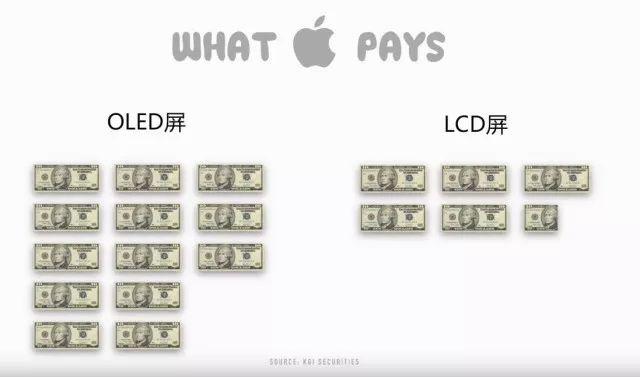
A joke: The phone that brings profits to Samsung is the iPhone X Because Samsung is a manufacturer that can meet the demand for new iPhones, it also holds pricing power. Apple certainly does not want to see such a situation. According to EGI Securities' estimation, Samsung charges Apple $120 to $130 for each OLED screen, while Apple's cost for the previous LCD screen was only $45 to $55, which is one of the reasons why the initial launch price of iPhone X was as high as $1000. In addition to using Samsung's customized OLED screen, the iPhone X also comes with components such as batteries and capacitors from Samsung. According to estimates, for every iPhone X sold, Samsung can earn a profit of $110 from this phone. According to Apple's estimation, Apple will sell 130 million iPhone X units, so Samsung can earn $14.3 billion in profits from the iPhone X. Of course, this was only a prediction at the beginning of the iPhone X's launch, and in reality, the sales of the iPhone X did not meet expectations.
Apple's cost difference between OLED and LCD screens, data source: EGI Securities The key to the different fates of Samsung and Apple: supply chain The relationship between Apple and Samsung stems from their different supply chain models. Unlike Steve Jobs, Tim Cook, the current CEO of Apple, is an expert in the supply chain field. After joining Apple from IBM in 1998, Cook helped streamline the company's supply chain, making it one of the most efficient companies in the world. Basically, it is achieved by outsourcing almost all production to suppliers mainly in Asia. The global supply chain system built by Apple adopts a procurement model of placing orders, and sometimes designs components such as processors, but never intervenes in production. The impact is that Apple habitually runs out of stock during peak sales periods, and when sales decline, there is a backlog of accessories. The global supply chain established by Apple may have slightly weaker control, but the risk is relatively low. Even if one company lags behind in technology or production, it can be switched to another company without dragging down performance for a long time. More importantly, the global supply chain is a big collective, with Apple making money and Samsung, Sharp, LG, Foxconn, and others making money. Samsung Electronics has opened its semiconductor, display, and other businesses to outsourcing services, providing services to numerous manufacturers including Apple. This is largely to avoid risks, and eggs are not put in the same basket. Although outsourcing services may cause competitors to use their own technology to attack their own products, Samsung products can still outperform their competitors as long as they do not open up their most advanced technology. When it comes to OLED screens, Apple has no other choice but to collaborate with Samsung. In the second half of 2017 alone, Apple needed 80 million OLED screens, which no other manufacturer could achieve. Even though Samsung's production capacity is difficult to meet, this is one of the reasons why the iPhone X was launched six weeks later than the iPhone 8. In order to reduce the cost of OLED screens, Apple invested $2.7 billion in LG Display, another company capable of producing OLED screens. Basically, a large amount of cash was prepaid in advance to support LG in order to increase production capacity. Google also has the same idea, investing $880 million in LG in hopes of breaking Samsung's monopoly. At least until 2020, Samsung will still be the * beneficiary of Apple's OLED screen demand, not to mention Samsung producing a large number of A-series chips for Apple. This may be the most peculiar corporate relationship in the business world. Since 2010, Apple and Samsung have been in a battle, with Samsung's Galaxy S essentially copying the first generation iPhone. The two companies have just ended a nearly seven-year patent litigation dispute, which has already cost both parties a high price. Business is only about profit. Despite ongoing lawsuits, Apple still purchases a large number of phone components from its main competitor Samsung. The iPhone X is a symbol of the entire chaotic relationship, capturing how the technology business operates at the highest level. The relationship between the two is like an unhealthy marriage, where Apple needs Samsung and Samsung clearly benefits from it. It is precisely because both parties can benefit from each other that Apple and Samsung have formed this seemingly strange but actually completely reasonable relationship. In other words, these two giant companies really need each other. Reference source: The Enlightenment of Apple and Samsung Patent Cases on Chinese Mobile Phones Going Global "by Zhong Lin 《Why Needs Samsung》 by Nerdwriter 《One big winner from ’s next iPhone could be its arch-rival》 by Josh Horwitz |
分享到:
Phone: 400-000-0000
E-mail: 123456@12a3.com
Adress: 北京市朝阳区xx大厦1001
Copyright @ 2018 . All rights reserved.